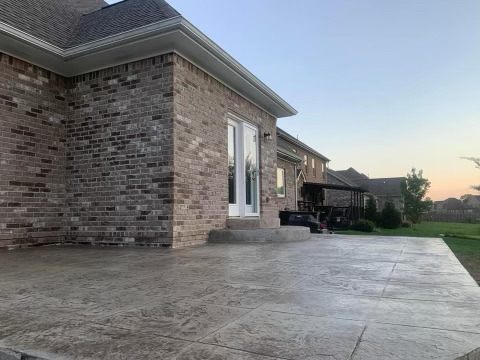
A patio is the floor of your outdoor living room. Get it right and you extend your usable living space for most of the year. Get it wrong and you end up with a slab that pools water, cracks at the edges, and gets too hot to walk on by July. The difference is in the planning — size, shape, drainage, finish, and how the patio connects to the rest of the yard. Here is how we think through a patio pour for Tennessee homes.
01Size it to how you will actually use it
The most common mistake is pouring a patio too small. A 10x10 slab fits a table for four but leaves no room to pull out a chair. A usable outdoor dining space starts around 12x16, and a true outdoor living setup with a seating area, a dining area, and circulation room wants 16x20 or more. It is almost always cheaper to pour the size you need once than to add on later.
Think about furniture first: lay out the furniture you plan to use on the grass, measure the footprint with a 3-foot clearance for walking around it, and that is your minimum patio size.
02Shape and traffic flow
Square and rectangular patios are efficient and easy to furnish. Curved and organic shapes blend better with landscaping and soften the hard edge between hardscape and lawn. The right choice depends on the yard — a formal backyard wants a clean rectangle, a wooded or hillside lot often wants curves that follow the grade.
Whatever shape you choose, plan how people will move from the house to the patio to the yard. A patio that blocks the natural path across the lawn gets disrespected and bypassed.
03Drainage: pitch it away from the house
Every patio needs a slight pitch — about 1/4 inch per foot — away from the foundation so water sheds off rather than pooling at the house. On flat Tennessee lots, this is straightforward. On sloped lots, we may need to build in a drainage channel or grade the sub-base carefully. A patio that traps water against the foundation will cause basement and crawl space problems.
Watch for low spots in the middle of the slab, too. Water that stands in a dip will eventually degrade the surface and invite mosquitoes.
04Finish options and how they perform
A broom finish is the durable, slip-resistant default — it is what most residential patios get. A stamped pattern gives you the look of stone or wood plank at a fraction of the cost and adds curb appeal. Exposed aggregate shows the gravel in the mix for a textured, decorative surface. Around pools, we recommend a cool-touch or lighter-colored finish that stays comfortable underfoot in the Tennessee summer sun.
Every finish is a trade-off between appearance and maintenance. Stamped and decorative finishes want a sealer to protect the color and texture; plain broom finishes are lower maintenance.
05Integrate steps, landings, and edges
Most patios need at least a step down from the house and a clean edge where the slab meets the lawn. Plan these in the pour — a poured concrete step with the right tread depth is far better than a wood step that rots. Edge details, whether a rounded bullnose or a straight chamfer, define how the patio reads and how it wears.
06Plan for the things you will add later
If you might add a fire pit, an outdoor kitchen, a pergola, or a hot tub in the future, tell your contractor before the pour. We can thicken the slab in specific areas, set sleeves for gas or electrical lines, or leave openings for future footings. Retrofitting these into an existing patio is expensive and often ugly.
07Let it cure before you use it
Concrete reaches most of its strength in 7 days and full design strength at 28 days, though patios are walkable in a day or two. Give a new patio a week before you put furniture on it, and keep vehicles off for at least a month. Patience in the first month buys decades of service.
Key Takeaway
Size the patio for real furniture and circulation, pitch drainage away from the house, choose a finish that fits the climate, and plan for future additions before the pour.
Related Service
Patios, Walkways & Pool Decks
Elegant outdoor entertaining slabs, curving garden paths, and non-slip pool surrounds.
View service details & pricingReady to talk to a real concrete crew?
Free on-site estimates across Middle & Southern Tennessee. No obligation.