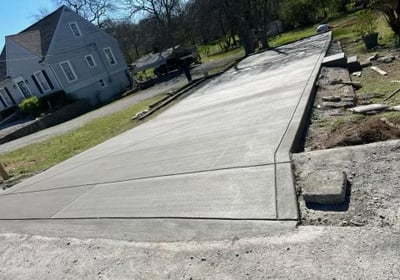
When a slab settles, sinks, or becomes uneven, the concrete is not the problem — it is the messenger. The slab moves because something underneath it has changed. Repairing the surface without fixing what caused the movement is a temporary fix at best. To actually solve a settled slab, you have to understand why it moved in the first place. Here are the real causes we see across Middle and Southern Tennessee.
01Sub-base compaction failure
The most common cause is a sub-base that was not compacted properly when the slab was poured. Loose soil under a slab compresses slowly under the weight of the concrete and any loads on top of it, and the slab settles into the depression. This is especially common on slabs poured in the last 20 to 30 years on backfilled soil — the fill was never compacted in lifts, and it has been settling ever since.
02Water erosion under the slab
Water moving under a slab carries soil with it. Over time, the support under the slab disappears and the slab sags into the void. This is common where downspouts discharge next to a slab, where drainage pitches water toward a walkway, or where a pipe has developed a slow leak under the concrete. Fix the water, or the void comes back.
03Soil type and clay behavior
Tennessee has a lot of clay soil, and clay is expansive — it swells when wet and shrinks when dry. A slab on clay moves with the seasons unless drainage is controlled and the moisture under the slab stays consistent. The cycle of wet and dry under a slab is what produces the slow, uneven settlement that cracks driveways and patios over years.
04Voids from decayed organic material
If a slab was poured over tree roots, buried wood, or other organic material, that material decays over time and leaves a void. The slab settles into the void. This is why stumps and roots should be removed before a pour, not buried under it. If you have a slab settling near where a tree used to be, this is a likely culprit.
05Traffic loads beyond the slab's design
A 4-inch residential driveway is designed for passenger cars. Park a loaded truck or an RV on it for years, and the sub-base compresses under the heavier load and the slab settles. The concrete is fine; the design was not matched to the use. This is why we ask what you will park on the slab before we spec the thickness.
06Frost heave in colder snaps
When moisture under a slab freezes, it expands and lifts the slab. When it thaws, the slab drops back — but often not perfectly, leaving a settled or tilted slab. Tennessee does not get deep freezes, but we get enough freeze-thaw cycles that frost heave contributes to uneven slabs, especially where drainage is poor.
07What to do about a settled slab
First, diagnose the cause. If water is the issue, fix drainage before touching the slab — otherwise any repair fails. If the sub-base has failed, the options are mudjacking (pumping a slurry under the slab to lift it), polyurethane foam injection (a lighter, more water-resistant lift), or replacement (tear out and repour with proper prep).
Mudjacking and foam injection work when the sub-base is salvageable. Replacement is the right call when the sub-base is failed across the slab or when the concrete itself is cracking structurally. We evaluate every slab on site before recommending a path.
Key Takeaway
Settled concrete is a symptom of sub-base, water, soil, or load problems underneath. Diagnose and fix the cause before lifting or replacing the slab, or the movement comes back.
Related Service
Concrete Repair & Resurfacing
Crack repair, spalling remediation, resurfacing overlays, and protective weather sealing.
View service details & pricingReady to talk to a real concrete crew?
Free on-site estimates across Middle & Southern Tennessee. No obligation.